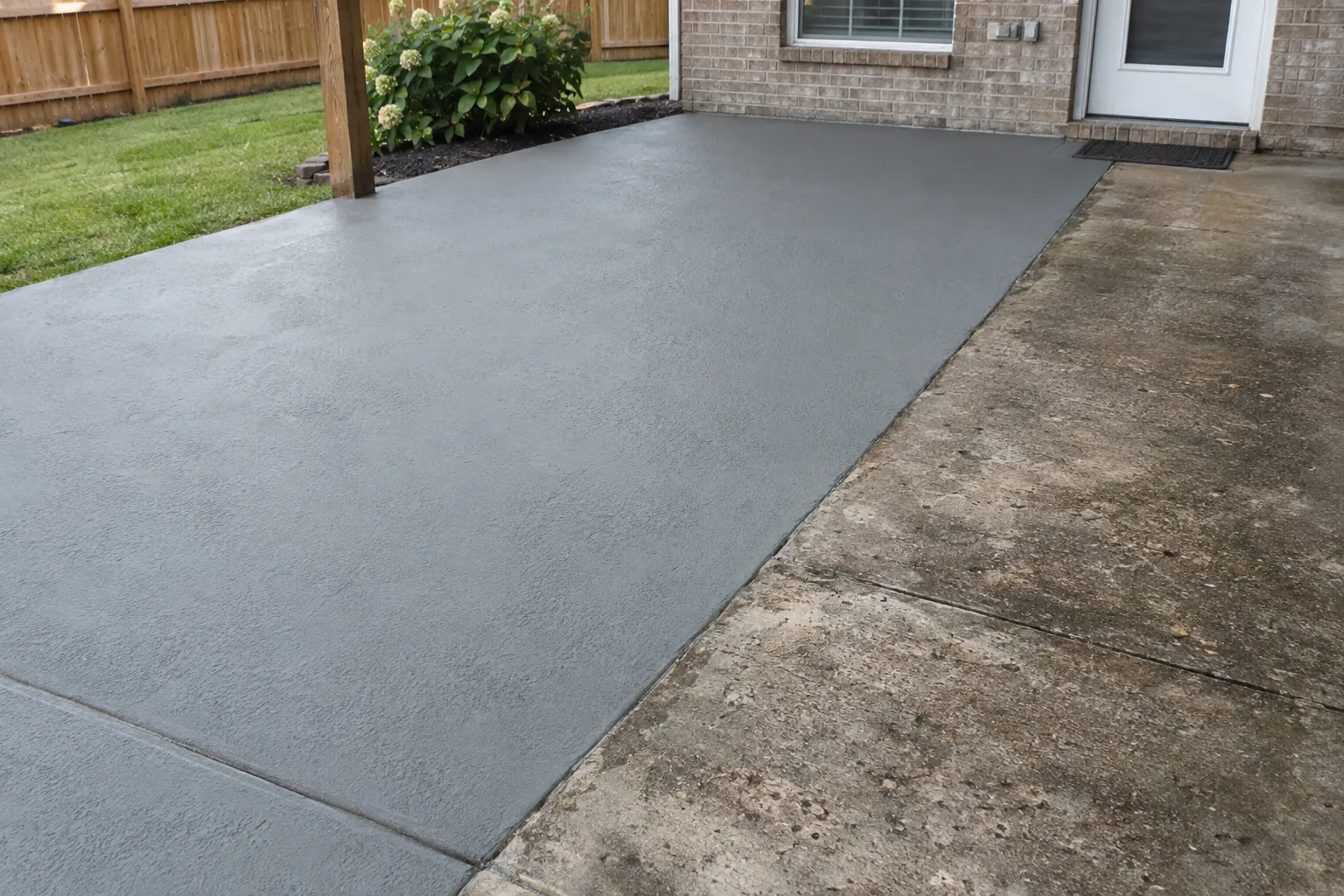
Clarksville Concrete Works handles concrete resurfacing and concrete sealing across Clarksville. If a driveway, patio, walkway, or pool deck is structurally sound but pitted, flaking, or stained, concrete resurfacing gives it a new surface without tear-out, and sealing protects it from the next round of winters.
Is Concrete Resurfacing Right for Your Slab?
Good candidates
- Surface scaling and flaking from freeze-thaw and de-icing salt - Pop-outs, pitting, and shallow spalls - Permanent stains or mismatched patches - An outdated look you want to update with color or texture
Poor candidates
If the slab is sinking, rocking, or broken into pieces, a resurfacing layer will crack right along with it. In that case, replacement is the better value. See concrete driveways for replacement. We'll tell you honestly which side of that line your concrete is on.
How Concrete Resurfacing Works
Surface preparation
The surface is pressure-washed, degreased, and mechanically ground or shot-blasted so the overlay can bond. Concrete grinding opens the surface pores the way sanding prepares wood for paint. Skipping it is the most common reason overlays peel.
Repairs first
Cracks are repaired, spalls are filled, and joint locations are marked so they can be carried through the new surface.
The overlay
A polymer-modified cement overlay is applied in thin coats by squeegee, trowel, or spray texture, then broom-finished, troweled smooth, stamped with a shallow texture, or colored. Joints are recut so the new surface cracks where the old one would.
Driveway Resurfacing
A resurfaced driveway can look close to new for a fraction of replacement cost when the slab underneath is solid. The overlay is thin, so it doesn't change the height at the garage or street. Cars typically stay off for a day or two after the final coat.
Concrete Overlays for Patios and Pool Decks
Overlays can add a stamped slate or stone texture, a spray knockdown finish around a pool, or a smooth colored surface. See concrete pool decks and stamped & decorative concrete.
Concrete Sealing
Why seal concrete in Clarksville
Concrete is porous. Water soaks in, freezes, and expands, and road salt speeds up the damage. A sealer slows how much water and salt get in and makes oil and grill stains easier to clean.
Types of sealer
- Penetrating silane and siloxane sealers: soak in and repel water without changing the look; best for plain driveways and walks - Acrylic sealers: sit on the surface and add a satin or wet look; standard on stamped and colored concrete, reapplied every two to three years - Polyurethane and epoxy coatings: tougher, mostly for interior floors such as epoxy garage floors
The sealing process
1. Pressure-wash the surface and degrease oil stains. 2. Repair cracks and joints so water can't get in around the sealer. 3. Let the concrete dry completely. 4. Apply thin, even coats by sprayer or roller, with an anti-slip additive on smooth or stamped surfaces.
New concrete should cure about 28 days before sealing.