Clarksville Concrete Works repairs existing concrete across Clarksville: sealing and injecting cracks, patching flaked and pitted surfaces, rebuilding broken edges, and fixing failed joints on driveways, patios, sidewalks, steps, pool decks, garage floors, and commercial slabs, before small problems turn into full replacements.
Concrete Crack Repair
Hairline and non-structural cracks
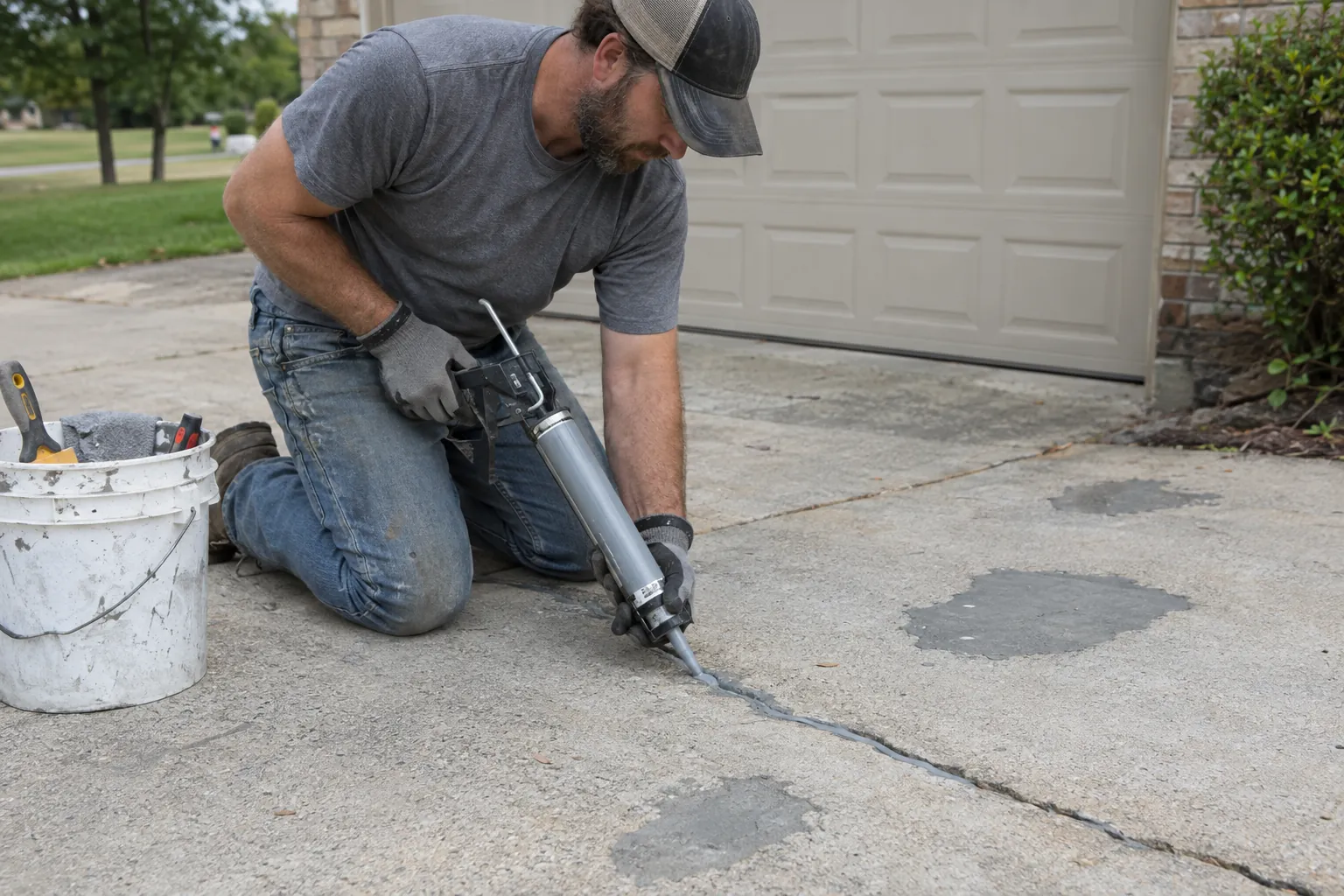
Narrow surface cracks are cleaned out, often routed into a small V-groove, and filled with a flexible polyurethane or polyurea sealant that keeps water out while letting the slab move. Sealing them early matters in Clarksville, where water in a crack freezes, expands, and widens it every winter.
Wider and active cracks
Cracks that keep moving or run through the full slab get a closer look at the base underneath. Depending on the cause, they're filled with a semi-rigid filler, injected, or stabilized.
Crack injection
For cracks in walls, foundations, and thicker slabs, a two-part epoxy is injected under pressure to bond the concrete back together, or an expanding polyurethane foam is used where the goal is sealing out water.
Crack stitching
Structural cracks can be stitched with steel staples or carbon-fiber stitches set into slots across the crack and bonded in epoxy, which keeps the two sides from separating further.
Spalling, Scaling, and Pop-Outs
Scaling and spalling
Scaling is the surface flaking off in thin layers, and spalling is deeper chunks breaking loose. Both are common on older Clarksville concrete that wasn't air-entrained or was hit hard with de-icing salt. Damaged areas are cut back to sound concrete, primed with a bonding agent, and patched with a polymer-modified repair mortar. If the damage is widespread but the slab is solid, resurfacing is often the better fix.
Pop-outs
Small cone-shaped holes where a piece of aggregate near the surface broke loose. They're cleaned and filled with patching material.
Broken edges and corners
Chipped slab edges and step corners are rebuilt with a formed repair mortar, pinned to the existing concrete where needed.
Driveway Repair
Driveways take the worst of it: tires, oil, winter salt, and water running off the roof and lawn. Common driveway repair work includes sealing cracks before winter, patching scaled and pitted areas near the garage and street, rebuilding broken edges where tires run off the slab, and replacing single panels that cracked through or sank. If more than about a third of the driveway is broken or the base has washed out, a full driveway replacement usually costs less over time than repeated patching.
Concrete Joint Repair
Control and expansion joints that have lost their filler let water and debris under the slab. Old material is removed, a foam backer rod is installed, and a self-leveling or gun-grade sealant is applied so water stays out.
What Causes Concrete Damage in Clarksville
- Freeze-thaw cycles: water in the surface or cracks freezes and expands
- De-icing salt: speeds up scaling on concrete that isn't air-entrained or sealed
- Soil movement: Clarksville clay shrinks and swells, and washed-out base leaves slabs unsupported
- No base or thin slabs: concrete poured straight on clay, or too thin for the load
- Missing or late joints: cracks form randomly instead of along planned lines
- Rusting rebar: steel too close to the surface rusts, expands, and pops the concrete
Blending Repairs With Existing Concrete
New patching material rarely matches weathered concrete exactly. We match texture by finishing the repair the same way as the slab around it, keep repairs to clean, square shapes along joint lines, and where appearance matters most, follow up with a resurfacing coat or sealer that evens out the color across the whole surface.
Concrete Repair Around Pools, Basements, and Garages
Pool decks need repairs that hold up to water and pool chemicals, with the coping joint resealed. Basement and garage floors often need crack repair before a coating goes down. See concrete pool decks and epoxy garage floors.
When Concrete Repair Isn't Enough
If the slab is broken into many pieces or the base underneath has failed, repairs only buy time. In that case, concrete driveway replacement or a new slab is the better value. We'll tell you which option fits after an on-site look.
Preventing Future Damage
Seal concrete every few years, keep downspouts directing water away from slabs, avoid rock salt on concrete less than a year old, and fill cracks as soon as they appear.